How Connecticut Homeowners Can Help Prevent Ice Dams Before Winter
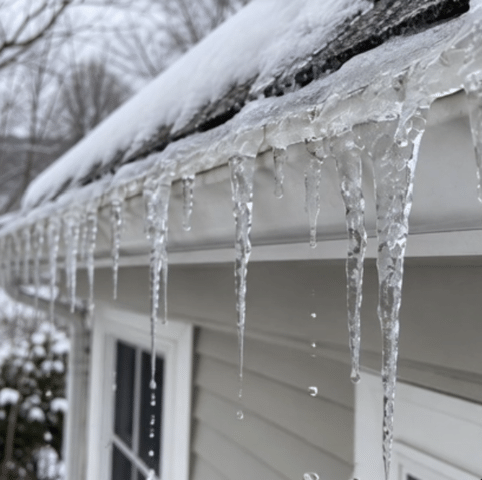
Connecticut winters can be tough on a home. Between snowstorms, freezing nights, and afternoon thaws, your roof has plenty to handle. But one common winter problem deserves attention before the first snowflake falls: ice dams.
The good news? Taking a few steps now can lower your risk of winter leaks—and help you avoid an unwelcome surprise on your ceiling.
What is an ice dam?
An ice dam is a buildup of ice along the lower edge of your roof that blocks melting snow from draining away.
It often starts when heat escapes from your living space and warms the roof above it. Snow melts, runs downhill, and freezes again when it reaches the colder roof edge. As that ice grows, water can collect behind it and work beneath the shingles, potentially damaging ceilings, walls, and insulation.
Think of it as a frozen roadblock. The water needs somewhere to go, and you don’t want that somewhere to be inside your home.
“The best time to think about ice dams is before there’s snow on your roof. Finding out where heat is escaping and addressing those trouble spots now can help homeowners avoid a lot of frustration later.”
— Eddie Griffin, Owner of Brown Roofing
1. Start with air leaks into the attic
Ice dam prevention starts inside your home.
Warm air can escape into the attic through small gaps around pipes, wiring, ceiling fixtures, and attic access doors. A qualified insulation or home energy professional can identify those openings and seal them properly.
This work is called air sealing. In everyday terms, it means closing the gaps that let heated indoor air reach places it shouldn’t. Simply adding insulation without addressing those gaps may leave an important part of the problem unresolved.
2. Have your insulation checked
Insulation slows heat moving from your living space toward the roof. If it is thin, uneven, or missing in places, more heat can escape and contribute to snow melting.
Ask a qualified professional to evaluate the insulation after checking for air leaks. The right approach depends on how your home is built, especially if you have cathedral ceilings or finished rooms beneath the roof.
You don’t need to know the technical terms or guess how much insulation you need. Start by explaining any problems you noticed last winter.
3. Make sure attic vents can do their job
In a home with a vented attic, outdoor air needs a clear path through the attic ventilation system. That airflow helps keep the roof colder in winter.
Vents beneath the roof overhang—called soffit vents—can become blocked by insulation. A professional can check that these openings and the pathways above them remain clear.
Adding more vents alone is not a complete solution. Ventilation works together with air sealing and insulation to reduce heat buildup beneath the roof.
4. Arrange for gutters and downspouts to be cleared
Fall leaves and twigs can block the route water needs to leave your roof. Before freezing weather arrives, have gutters and downspouts cleared and checked for drainage problems. The National Weather Service recommends removing this debris so melting snow can drain away.
Just remember: clean gutters alone won’t prevent ice dams. Heat escaping from the home still needs attention.
Leave gutter cleaning and inspections at roof height to trained professionals. Homeowners should keep their observations at ground level.
5. Schedule a roof inspection before snow hides potential problems
Tell your roofing contractor about any leaks, heavy ice buildup, or recurring trouble spots from previous winters. Photos taken safely from the ground can help explain what you’ve seen.
An inspection is also an opportunity to discuss the roof’s protection against backed-up water. If you’re planning a roof replacement, ask about ice and water shield—a protective membrane installed beneath the roofing in vulnerable areas.
This layer helps protect against water intrusion if an ice dam develops. It does not stop ice from forming or replace the need to address heat loss.
6. Make a safe plan for winter
If ice builds up despite your preparation, don’t climb onto the roof or try to chip it away yourself. Working around snow and ice can cause injuries and damage the roof. Contact a qualified professional to assess the situation.
“No homeowner should risk a fall trying to clear ice or inspect a roof. Stay safely on the ground, let us know what you’re seeing, and leave the work at roof level to trained professionals.”
— Eddie Griffin, Owner of Brown Roofing
Get your home ready before winter arrives
You don’t have to tackle everything at once. Start by arranging an inspection, sharing any concerns from last winter, and finding out which improvements will make the most difference for your home.
Brown Roofing can help Connecticut homeowners assess roof conditions and ventilation concerns and understand their next steps before snow and freezing temperatures arrive.
Visit BrownRoofing.org to schedule an inspection.
Brown Won’t Let You Down.