Why Brown Roofing Does Not Install New Shingles Over Old Shingles
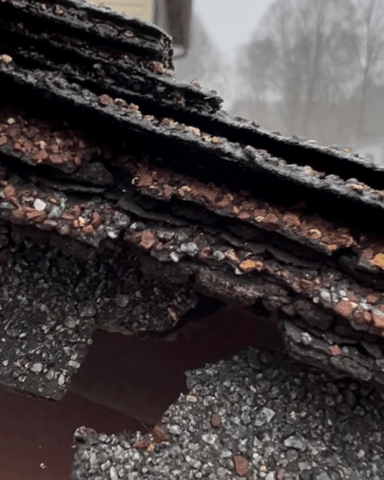
At Brown Roofing, we remove the existing shingles before installing a replacement shingle roof. That allows us to inspect what is underneath, address damage, and build your new roofing system on a sound foundation.
“A homeowner deserves to know what their new roof is being installed over. Removing the old shingles gives us the opportunity to find problems, explain them, and address them before they get covered up.”
— Eddie Griffin, Owner, Brown Roofing
Here is why that matters for your home.
Hidden wood damage can go unnoticed
Underneath your shingles is the roof deck: the plywood or wood boards that support the roofing materials and hold the nails.
Small leaks can damage this wood long before you see a water stain on your ceiling. Installing another layer of shingles can cover soft spots, deteriorated plywood, and evidence of past leaks.
An attic inspection helps, but it cannot show every part of the deck’s upper surface. Removing the old roofing allows a much more complete inspection. Shingle manufacturers specifically identify access to the wood deck as an advantage of a full tear-off.
Think of it like replacing a kitchen floor: if the wood underneath is damaged, putting a beautiful new surface over it does not repair the foundation.
Existing moisture problems can continue
New shingles do not dry out wet wood, remove existing mold, or correct the reason moisture entered the roof.
If damp or deteriorated materials remain covered, the underlying problem may continue even though the roof looks new from the street. Manufacturers warn that installing shingles over a roof with extensive leaks can leave water damage or mold issues untreated.
An overlay does not automatically cause mold. The concern is that existing moisture problems can remain hidden and unresolved.
New shingles need a suitable surface
Old shingles may be curled, cracked, lifted, or uneven. Those irregularities can affect the new shingles installed above them, creating bumps, raised areas, and an uneven appearance.
This is more than a cosmetic concern. Shingles need proper support and installation to perform as intended. Manufacturers technical guidance calls for a smooth surface and recommends tear-off when the existing roofing is too distorted to provide one.
At Brown Roofing, we want to establish the condition of the surface underneath your new roof before covering it.
Fastening the new shingles becomes more complicated
Roofing nails must reach securely into the wood deck. The old shingles are not a substitute for that solid connection.
With an overlay, nails must pass through more material. If the installer does not account for the added thickness, the nails may not penetrate the deck deeply enough. Improper fastening can leave shingles more vulnerable to loosening or wind damage.
The Asphalt Roofing Manufacturers Association specifically instructs installers to account for the number and thickness of roofing layers when selecting nail length.
Longer nails also cannot make rotten wood sound again. The condition of the deck still matters.
Important leak protection may remain old or incomplete
Your roof’s protection extends beyond the shingles.
Underlayment is the protective material underneath them. Ice and water shield is a membrane used in vulnerable areas to help resist water getting through to the wood.
Leaving the existing shingles in place limits access to the deck and the opportunity to rebuild these protective layers across the roof. A full tear-off allows new leak barriers to be installed in critical locations.
For Connecticut homeowners, those details matter when wind-driven rain or backed-up meltwater finds its way beneath the shingles.
Chimneys, walls, and roof openings still need attention
The metal pieces around chimneys, roof-to-wall connections, and other vulnerable areas are called flashing. They direct water away from places where it could enter your home.
New shingles will not repair rusted flashing, an incorrect overlap, or a poorly fitted connection. An overlay also changes the height of the roof surface, so these details must work with the new layer.
Manufacturers recommends replacing metal flashing whenever possible and checking that any reused flashing has the right dimensions and enough remaining service life for the new roof.
“The areas around chimneys, walls, and roof openings deserve just as much attention as the shingles. A roof replacement gives us the chance to address those connections as part of the whole system.”
— Dennis Danley, General Manager, Brown Roofing
Another layer adds permanent weight
An overlay leaves the weight of the old shingles in place and adds the weight of the new ones.
That does not mean every roof with two layers is unsafe. It means the roof structure must be suitable for the added load. Existing sagging, weakened decking, or structural concerns should never be ignored.
Snow and ice add seasonal weight, too. Brown Roofing’s approach removes the old roofing instead of leaving that unnecessary load on your home.
Ventilation problems do not disappear
If your attic has blocked air intakes, inadequate exhaust ventilation, or moisture buildup, another layer of shingles will not solve those issues.
Roof replacement is an opportunity to evaluate ventilation along with the roofing materials. IKO specifically recommends checking that roof vents are sufficient, properly located, and unobstructed during reroofing.
A tear-off alone does not fix ventilation either. The underlying issue must be identified and addressed.
Warranty protection requires a closer look
It would be inaccurate to say that every overlay automatically voids every shingle warranty. Some manufacturers permit overlays under specific conditions.
However, a material warranty does not necessarily cover failures caused by poor installation, deteriorated decking, or reused flashing. GAF, for example, distinguishes manufacturing-defect coverage from problems involving workmanship, the deck, or existing flashing.
Homeowners should ask what coverage applies to the actual installation—not simply how many years appear on the shingle package.
Today’s savings can become tomorrow’s expenses
Leaving the old roof in place postpones its removal. When the roof eventually needs a complete replacement, there will be more material to tear off and dispose of.
Multiple layers can also make future repairs more involved because the contractor may need to work through both layers to reach damaged materials. If hidden problems force an early replacement, the initial savings can disappear.
An overlay may also raise questions during a future home inspection about the condition underneath and the cost of eventual replacement. It does not automatically prevent a sale or insurance coverage, but it can require additional explanation or evaluation.
Why Brown Roofing starts with a full tear-off
Some roofs may qualify for an overlay under applicable requirements and manufacturer instructions. IKO acknowledges that possibility when the existing shingles lie flat and the deck is in good condition. Brown Roofing’s policy is to remove the existing shingles so we can inspect and prepare the roof ourselves.
Our replacement process includes:
-
Removing the existing shingle layers.
-
Inspecting the decking and replacing damaged wood as needed.
-
Securing and preparing the deck.
-
Installing deck seam tape, ice and water protection, and synthetic underlayment as part of the Brown Roofing system.
-
Addressing flashing, roof edges, and ventilation.
-
Installing the new shingles according to the applicable product requirements.
A full tear-off requires more work upfront. It also gives us access to the parts of your roof that determine how well the finished system protects your home.
If you are comparing roofing estimates, ask one simple question: “Does this include removing the old shingles and inspecting the wood underneath?”
That answer can help explain why two estimates with similar shingles offer very different scopes of work.
To schedule a free roof inspection, call 1-203-723-1372 or visit brownroofing.org.
Brown Won’t Let You Down.