Why Staggering Shingle Courses Matters During a Roof Installation
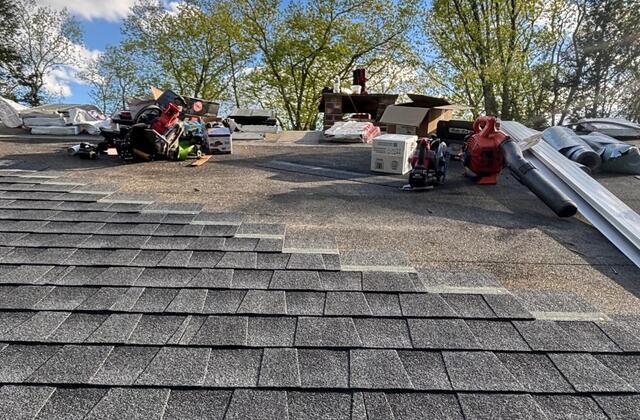
What Does It Mean to Stagger Shingle Courses?
Staggering shingle courses means each row of shingles is offset from the row below it. Instead of lining up every shingle joint directly above another joint, the seams are shifted in a pattern as the shingles move up the roof.
Think of it like brickwork. The joints are not stacked straight up and down. They are offset to create strength, stability, and protection.
On a roof, that offset pattern helps prevent weak lines from forming across the shingle system.
Why Shingle Staggering Is So Important
1. It Helps Prevent Water Intrusion
Your roof’s main job is to move water off the home. When shingle seams are lined up too closely, they can create a direct pathway for water to travel beneath the shingles.
That is bad news.
Rain, melting snow, and wind-driven moisture can work their way into those vertical seams. Over time, this can increase the risk of leaks, damaged underlayment, rotted decking, and costly repairs.
Proper staggering breaks up those seams and helps the roofing system shed water the way it should.
2. It Protects the Roof Decking
The roof decking is the wood foundation beneath your shingles. If water gets past the shingles and underlayment, the decking can become soft, warped, or rotted.
At Brown Roofing, we take roof decking seriously. During installation, we inspect the decking after the old roof is removed. We also back nail the decking when needed, which helps secure it properly and reduce movement.
But even strong decking still depends on the shingles above it being installed correctly. Staggered shingle courses help keep water from finding easy entry points into the system.
3. It Improves Wind Resistance
Connecticut roofs take a beating from wind, storms, heavy rain, snow, and freeze-thaw cycles. If shingles are poorly aligned or installed in an improper pattern, the roof may be more vulnerable to wind lift.
Proper staggering helps create a more secure and balanced shingle layout. When combined with correct nailing, quality materials, and proper installation methods, it gives the roof a much better chance of standing strong when the weather gets rowdy.
Brown Roofing primarily installs high-performance shingles like IKO Dynasty and Nordic, which are rated for winds up to 130 mph when installed properly. But even the best shingle needs the right installation pattern behind it.
A great shingle installed the wrong way is like armor strapped on with shoelaces.
4. It Prevents Shingle Seams From Becoming Weak Spots
Every shingle has joints where one piece meets another. If those joints are stacked in a straight line, the roof can develop repeated weak points.
Those stacked seams may allow:
Water to travel beneath the shingles
Wind to catch vulnerable edges
Shingles to lift more easily
Wear patterns to form faster
Leaks to develop in predictable lines
Staggering spreads those seams across the roof instead of concentrating them in one vulnerable area.
5. It Gives the Roof a Cleaner Finished Appearance
A properly staggered roof does not just perform better. It also looks better.
When shingle courses are laid correctly, the finished roof has a uniform, professional appearance. The lines look natural, the pattern flows, and the roof has the clean curb appeal homeowners expect after investing in a new roofing system.
Poor staggering can make a roof look awkward, uneven, or rushed. Even worse, it may signal deeper installation problems hiding beneath the surface.
6. It Helps the Roof Meet Manufacturer Installation Requirements
Shingle manufacturers provide specific installation instructions for their products. These instructions include proper course layout, offset patterns, nail placement, exposure, and flashing details.
Following those instructions matters.
If shingles are not installed according to manufacturer specifications, it can affect performance and potentially create warranty issues. At Brown Roofing, our crews are trained to follow proper installation methods because a roof should not just look finished on day one. It should be built to protect the home for decades.
Brown Roofing’s Approach to Proper Shingle Installation
At Brown Roofing, staggering shingle courses is one part of a much larger system. A strong roof depends on every layer working together.
That includes:
Proper tear-off and roof deck inspection
Replacing compromised plywood when needed
Back nailing the decking
Sealing deck seams with heavy-duty seam tape
Installing ice and water shield in vulnerable areas
Installing synthetic underlayment
Using larger drip edge and rake edge than required by code
Installing starter shingles correctly
Using ring shank nails for stronger holding power
Following the manufacturer’s shingle layout and nailing pattern
Paying close attention to flashing, valleys, vents, chimneys, and roof-to-wall transitions
Every detail matters because every detail protects the home.
Staggering shingle courses is not just a visual pattern. It is a critical part of proper roof installation.
When done correctly, it helps protect against water intrusion, wind damage, premature wear, and installation failures. When done incorrectly, it can create weak spots that may lead to leaks, lifted shingles, and long-term roof problems.
At Brown Roofing, we believe your roof should be installed with precision from the first course to the final ridge cap. Because a roof is more than shingles. It is a system built to protect your home, your family, and everything underneath it.

.png)