The Anatomy of a Roof: What Every Homeowner Should Know
Roof Framing: The Skeleton of the Roof
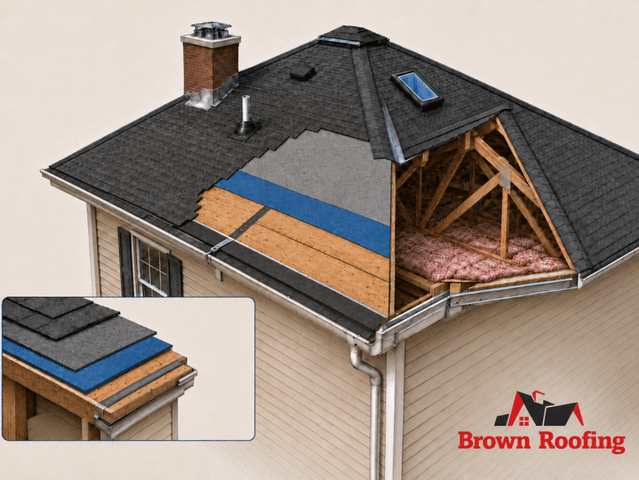
The roof framing is the structural support system underneath everything. It includes the rafters or trusses that give the roof its shape, slope, and strength.
This framing carries the weight of the roof system, including decking, shingles, snow, ice, and wind pressure. In Connecticut, where homes deal with heavy rain, winter storms, ice dams, and freeze-thaw cycles, strong roof framing is essential. If the structure is sagging, damaged, or compromised, the roof cannot perform the way it should.
Roof Decking: The Foundation of the Roofing System
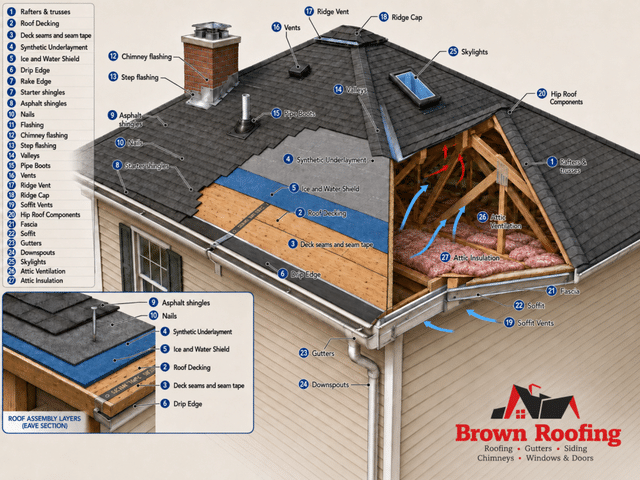
Roof decking is the wood surface installed over the roof framing. It is usually made of plywood or OSB, and it provides the base that the roofing system is installed on.
Decking is one of the most important parts of the roof because every layer above it depends on it. If the decking is soft, rotted, delaminated, or weakened by moisture, the shingles cannot be fastened properly. That can lead to nail pops, leaks, lifted shingles, uneven roof lines, and premature roof failure.
At Brown Roofing, we inspect the decking after the old roofing materials are removed. Any damaged wood is replaced before the new roofing system is installed.
We also back nail the roof decking. Back nailing means we secure the decking from underneath or through the framing areas where needed to tighten and strengthen the connection between the roof deck and the roof structure. This helps reduce movement, improve the hold of the decking, and create a stronger foundation for the new roofing system. A roof is only as strong as the surface it is built on, and proper decking attachment is a critical part of long-term performance.
Deck Seams: Small Gaps That Need Serious Protection
Deck seams are the joints where pieces of roof decking meet. These may seem like small details, but they can become vulnerable areas if water ever gets beneath the shingles.
At Brown Roofing, all deck seams are sealed with heavy-duty seam tape specifically designed to prevent moisture intrusion. This adds another layer of protection over the roof deck before the underlayment and shingles are installed.
Sealing deck seams helps protect the home if wind-driven rain, ice dams, or storm damage ever allow water beneath the outer roofing materials. It is one more layer of defense built into the roofing system before the shingles ever go on.
Ice and Water Shield: Protection for the Most Vulnerable Areas
Ice and water shield is a self-adhering waterproof membrane installed in leak-prone areas of the roof. It is commonly used along the eaves, valleys, roof-to-wall transitions, around chimneys, skylights, vents, and other penetrations.
This layer is especially important in Connecticut because of ice dams. When snow melts and refreezes near the edge of the roof, water can back up under the shingles. Ice and water shield helps protect the roof deck from that trapped moisture.
At Brown Roofing, our ice and water shield is manufactured to our specifications, going beyond what is required by code. Code is the minimum standard. We build our roofing systems with stronger protection because Connecticut weather demands more than the bare minimum.
Synthetic Underlayment: The Secondary Water Barrier
Synthetic underlayment is installed over the roof decking and beneath the shingles. It acts as a protective layer between the wood deck and the outer roofing materials.
Its purpose is to help shed water and protect the roof deck if shingles are ever lifted, damaged, or compromised. It also helps protect the home during the installation process before the shingles are installed.
Brown Roofing uses synthetic underlayment that is manufactured to our specifications, beyond what is required by code. This gives the roofing system an added layer of protection under the shingles, helping defend the home against wind-driven rain, moisture intrusion, and long-term weather exposure.
Think of shingles as the visible armor, and the underlayment as the shield working quietly underneath.
Drip Edge: Protecting the Eaves
Drip edge is metal flashing installed along the lower edges of the roof, also known as the eaves. Its job is to direct water away from the roof deck, fascia, and underlying wood.
Without proper drip edge, water can curl back under the shingles and damage the edges of the roof. Over time, that can lead to rotted decking, damaged fascia, soffit problems, and gutter issues.
Brown Roofing uses larger drip edge than required by code. This gives the roof better protection at one of its most vulnerable borders. The eaves take a beating from rain, snow, ice, wind, and freeze-thaw cycles. Larger drip edge acts like armor for the outside edge of the roof, helping keep water where it belongs: off the roof and away from the wood underneath.
Rake Edge: Protecting the Gable Ends
Rake edge is metal flashing installed along the sloped edges of the roof, also called the gable ends. These edges are exposed to wind, rain, and sideways weather, making them especially vulnerable.
Rake metal helps protect the exposed edge of the roof decking and gives the roof a clean, finished appearance. It also helps reduce the chance of wind-driven rain reaching the side edges of the roofing system.
Brown Roofing uses larger rake edge than required by code. Like our larger drip edge, this provides stronger protection for the roof’s outer borders. The edges of a roof are where water, ice, and wind often attack first, so we build those areas with added defense.
Starter Shingles: The First Row of Protection
Starter shingles are installed along the eaves and rakes before the main shingles go on. They create a sealed edge and help prevent wind from getting under the first row of shingles.
This matters because the edges of the roof experience some of the strongest wind pressure. Without proper starter shingles, the first course of shingles can lift, curl, or allow water underneath.
Starter shingles may not be highly visible when the roof is finished, but they play a major role in keeping the system secure.
Shingles: The Visible Weather Shield
Shingles are the most visible part of the roof. They protect the home from rain, snow, wind, sun, and everyday weather exposure while also giving the home its finished look.
But shingles are only one part of the system. Even the best shingles can fail early if they are installed over bad decking, poor ventilation, weak flashing, or improper underlayment.
Brown Roofing primarily uses IKO Dynasty and IKO Nordic shingles, which are rated for winds up to 130 mphwhen properly installed as part of a complete roofing system. These shingles are built for strength, durability, and long-term protection against tough weather conditions.
For Connecticut homeowners, that wind resistance matters. Strong shingles help protect against blow-offs, wind lift, storm damage, and premature roof failure.
Nails and Fasteners: Small Parts With a Big Job
Roofing nails may be small, but they are critical to the strength of the roof. Proper nail type, placement, and depth all matter.
Brown Roofing always uses ring shank nails. Unlike regular smooth-shank nails, ring shank nails have ridges along the shaft. Those rings grip the wood more aggressively, creating a stronger hold.
A regular nail can pull out more easily under pressure because the shaft is smooth. A ring shank nail bites into the decking, making it more resistant to pull-through and wind uplift. That added holding power helps keep shingles locked in place during storms, high winds, and seasonal expansion and contraction.
Thousands of nails hold a roof together. Choosing the right nail is not a small detail. It is a major part of building a stronger roof.
Flashing: Leak Protection Around Transitions
Flashing is used wherever the roof meets another surface or changes direction. This includes chimneys, walls, valleys, skylights, dormers, and vent pipes.
Flashing is one of the most important parts of a roofing system because many leaks happen at transitions, not in the middle of an open roof slope.
Proper flashing directs water away from vulnerable areas. Poor flashing allows water to sneak behind siding, around chimneys, under shingles, and into the home. That is why flashing should never be treated as an afterthought.
Chimney Flashing: Protecting the Roof Around Masonry
Chimney flashing protects the area where the chimney meets the roof. This usually includes step flashing, counter flashing, and sometimes a cricket or saddle depending on the chimney size and roof design.
Because a chimney is masonry and the roof is made of layered roofing materials, this transition must be carefully protected. If chimney flashing fails, water can enter around the chimney and cause ceiling stains, rot, mold, masonry damage, and interior leaks.
A properly flashed chimney helps move water away from one of the most common leak areas on a roof.
Step Flashing: Protection Where Roof Meets Wall
Step flashing is installed where a roof slope meets a vertical wall. Each piece is layered with the shingles to guide water down and away from the wall.
This is critical around dormers, additions, sidewalls, and roof-to-wall transitions. When step flashing is missing, reused incorrectly, or buried under caulk, water can get behind the siding and into the home.
Proper step flashing is one of those details that separates a roof that looks finished from a roof that is truly protected.
Valleys: Where Heavy Water Flow Happens
A roof valley is where two roof slopes meet. Valleys handle a large amount of water because runoff from two roof sections collects in one channel.
Because of that heavy water flow, valleys need extra protection. Ice and water shield, proper underlayment, and correct shingle or metal valley installation are all important.
A poorly installed valley can become one of the fastest places for a roof to leak. A properly installed valley helps move water safely off the roof.
Pipe Boots and Vent Flashing: Sealing Roof Penetrations
Any time something comes through the roof, it creates a potential leak point. Plumbing vents, exhaust vents, and other roof penetrations need proper flashing or boots to keep water out.
Pipe boots often include a rubber seal around the pipe. Over time, rubber can crack, split, or dry out from sun exposure. When that happens, water can run directly into the attic.
These small components should always be inspected because they are common sources of leaks, especially on older roofs.
Ridge Vent: Letting the Attic Breathe
A ridge vent is installed along the peak of the roof. It allows warm, moist air to escape from the attic.
Proper attic ventilation helps reduce heat buildup, moisture buildup, mold risk, and ice dam concerns. Without good exhaust ventilation, trapped attic heat can shorten shingle life and damage the underside of the roof deck.
A roof needs ventilation to perform properly. Ridge vent helps create that airflow.
Soffit Vents: Bringing Fresh Air Into the Attic
Soffit vents are located under the roof overhang. They allow cooler outside air to enter the attic.
For ventilation to work, air needs a balanced path: intake through the soffits and exhaust through the ridge or roof vents. If the soffit vents are blocked by insulation, debris, paint, or poor construction, the attic cannot breathe correctly.
Good soffit ventilation helps regulate attic temperature and moisture, which protects the roof from the inside out.
Ridge Cap Shingles: Protecting the Peaks
Ridge cap shingles are installed along the ridges and hips of the roof where roof planes meet.
These areas are highly exposed to wind and weather, so they need special protection. Ridge cap shingles help seal the peaks of the roof while giving it a finished appearance.
They are not just decorative. They protect some of the most exposed areas of the roofing system.
Fascia: The Board Behind the Gutter
Fascia is the vertical board along the lower edge of the roof. Gutters are usually attached to the fascia.
Fascia helps support the gutter system and finishes the roofline. If water gets behind the gutter or drip edge, the fascia can rot. Once fascia rots, gutters can loosen, pull away, or fail during heavy rain or snow.
Protecting the fascia starts with proper roof edge details, including drip edge and gutter installation.
Soffit: The Underside of the Roof Overhang
The soffit is the underside of the roof overhang. It protects the rafters and roof structure while also supporting attic ventilation when vented soffit panels are used.
Damaged soffits can allow moisture, pests, and outside air into areas where they do not belong. Vented soffits also help the attic breathe, making them an important part of the overall roof system.
Gutters: Moving Water Away From the Home
Gutters collect water from the roof and direct it away from the home. A roof can shed a tremendous amount of water during a heavy rainstorm, and that water needs to be controlled.
Without properly working gutters, water can spill over the edges, damage fascia, stain siding, erode landscaping, leak into basements, and affect the foundation.
Gutters are not shingles, but they are still a major part of protecting the home from water damage.
Downspouts: Carrying Water Safely Away
Downspouts move water from the gutters down and away from the house.
If downspouts are clogged, undersized, or dumping water too close to the foundation, water can pool around the home. That can lead to basement moisture, soil erosion, and foundation problems.
A good roof system should work together with a good gutter and drainage system.
Skylights: Natural Light With Critical Flashing Needs
Skylights bring natural light into the home, but they also create a roof penetration. That means they need proper flashing, underlayment, and sealing.
Many skylight leaks are not caused by the glass itself. They are caused by worn flashing, improper installation, old seals, or failing roofing materials around the skylight.
When replacing a roof, skylights should always be inspected carefully.
Attic Insulation: Helping Control Heat and Moisture
Insulation is not technically a roofing material, but it has a major impact on how the roof performs.
Poor attic insulation allows warm air from the living space to escape into the attic. In winter, that heat can warm the roof deck, melt snow unevenly, and contribute to ice dams. In summer, poor insulation can make the home hotter and less efficient.
A strong roofing system works best when attic insulation and attic ventilation are working together.
Why the Whole Roofing System Matters
A roof is a system of layers. The shingles shed water. The nails hold the shingles in place. The underlayment protects the deck. The ice and water shield defends vulnerable areas. The seam tape protects deck joints. The flashing protects transitions. The ventilation protects the attic. The gutters move water away from the home. The decking supports everything above it.
When every part is installed correctly, the roof works as one complete shield for the home.
At Brown Roofing, we build roofing systems with stronger details than the minimum requirements because Connecticut homes need real protection from rain, snow, wind, ice, heat, and freeze-thaw cycles.
Your roof should be more than a layer of shingles. It should be a complete system built to protect your home for decades.
Brown Won’t Let You Down.
.png)