How and When Moss Begins to Grow on Your Roof
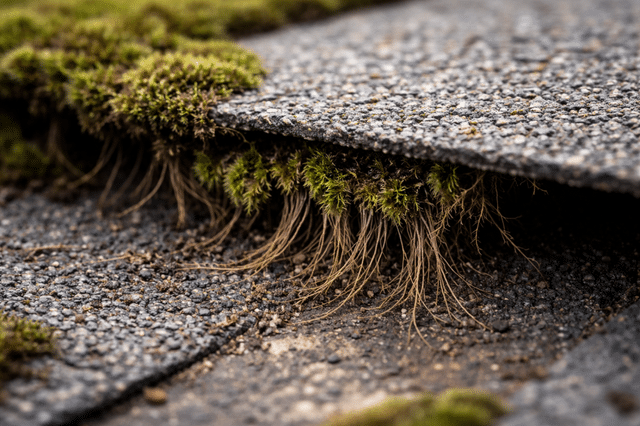
If you have started seeing green patches on your roof it's not just a cosmetic issue. Moss is a sign that your roof is staying damp longer than it should, and once that starts happening, your roof system can begin to suffer in ways most homeowners never see until the damage is already done.
At brown roofing, we have inspected countless roofs across Connecticut where Moss looked minor from the ground but had already begun affecting the shingles, the underlayment, and in some cases even the roof decking below.
As brown roofing owner Eddie Griffin often says, “your roof is designed to shed water, not retain it.” That is exactly why Moss is such a problem period a healthy roof is supposed to dry out and move water off of the home. Moss does the opposite.
How Moss begins to grow on your roof
Moss does not usually appear overnight period it begins when tiny airborne spores land on an area of the roof that stays damp long enough for them to take hold. That usually happens in places where there is shade, trapped moisture, and debris
The most common conditions that allow Moss to start growing our overhanging trees, N facing roof slopes, damp leaves or pine needles collecting on the roof, and areas that do not get enough sunlight dry properly. In Connecticut, Moss growth often becomes more noticeable in the spring and fall because those seasons bring a combination of moisture, cooler temperatures, and reduced drying time.
Many homeowners think Moss only starts in the spring. While springtime can be an issue, in reality, moss can begin establishing whenever conditions stay damp long enough. Spring is simply when it often accelerates and becomes easier to notice. After a wet winter, a shaded roof can become the perfect environment for Moss to spread.
What Moss actually does to your shingles
One important point is that Moss does not have to have a true root system like a tree or a shrub. It spreads using small thread like structures that help it anchor itself to the surface. So when people talk about Moss roots growing under their shingles that is technically not what is happening.
But the damage is still very real
As most thickens on top of the asphalt shingles, it acts like a wet sponge. It holds moisture against the shingle surface much longer than normal. That constant dampness can wear down the shingle overtime, weaken the surface, and shorten the life of the roof.
As the Moss mat becomes thicker, it can also begin to push up along shingle edges in between shingle tabs. That happens because once the edge of the shingle is lifted even slightly, water has a better chance of getting where it does not belong. Instead of flowing cleanly down your roof, water can slow down, get trapped, and work its way underneath the shingles.
What happens underneath the shingles
Shingles nails this is where the hidden damage begins.
When Moss causes shingles to stay wet, curl, lift, or separate slightly, the area underneath those shingles can remain game for extended periods. That can affect the roofing materials below in several ways.
First, trap moisture can begin to affect the underside of the shingles In the underlayment beneath them. Over time, the roofing system can soften, discolor, or deteriorate faster than it should.
Second, repeated wetting and drying, especially during Connecticut freeze thaw cycles, can make that situation even worse. Water that gets underneath lifted shingles can freeze, expand, and force materials apart. Then when it thaws, more moisture can enter. That cycle can continue again and again, quietly stressing the roof system.
Third, if water continues moving downward past the shingles and underlayment, it can eventually reach the roof decking.
How Moss can damage roof decking
Roof decking is the structural wood layer beneath the roofing materials. On many homes, that decking is plywood or OSB. It is a critical part of the roof system because it supports everything above it.
When moisture repeatedly reaches the decking, the wood can begin to absorb that moisture. At first, that they show up as dark staining, dampness, or minor softening. If that problem continues, the decking can start to deteriorate more seriously.
That damage may include wood rot, delamination, soft spots, swelling, and loss of structural integrity. In more advanced cases comma the decking may no longer provide a solid fastening surface for shingles and nails period once that happens the roof system is no longer performing the way it should right.
This is one of the reasons a Moss covered roof should never be dismissed as just an appearance issue. What you see on top may only be part of the story. The damage can be hidden underneath.
Why Moss is especially hard on aging roofs
Moss is often more destructive on older roofs because time has already weakened the shingles. If the granules are wearing off, the edges are becoming brittle, or the roof has minor vulnerabilities, Moss can speed up the breakdown.
A roof that might have had a few more years of life left can start falling sooner when Moss is allowed to keep trapping water against it.
That is why action matters!
When brown roofing inspects a roof with Moss growth, we are not just looking at the surface. We are evaluating the full system.
We look at how widespread the Moss is, whether the shingle edges have been lifted, whether moisture May have gotten beneath the roofing materials, and whether there are signs of damage in the attic or on the decking below. We also look at the surrounding conditions that allowed the Moss to grow in the 1st place, such as shade, debris buildup, and drainage patterns.
That full picture matters because removing Moss without understanding the roof's condition can miss the bigger problem.
Eddie Griffin often says, “we don't just install a roof we fortify it.” At brown roofing, that approach matters just as much during an inspection as it does during a replacement. We want to know whether the Moss is only on the surface, or whether the roof system underneath has already been compromised.
Can Moss be removed, or does the roof need to be replaced?
That depends on the age of the roof and how far the damage has gone. If the roof is still in otherwise solid condition and the Moss has not caused underlying deterioration, treatment and maintenance may be enough. But if the shingles are already lifting, softening or allowing moisture to affect the decking, replacement may be the smarter long term solution.
In some cases, the biggest issue is not just the Moss itself. It is the fact that conditions for Moss growth still remain and the Moss has exposed a roof that was already vulnerable.
If you were seeing Moss on your roof, the best next step is a professional inspection period brown roofing can determine whether the issue is surface level or whether hidden damage has already started beneath the shingles.

.png)