Melting the Ice Isn't Enough: Solving the Real Cause of Ice Dams
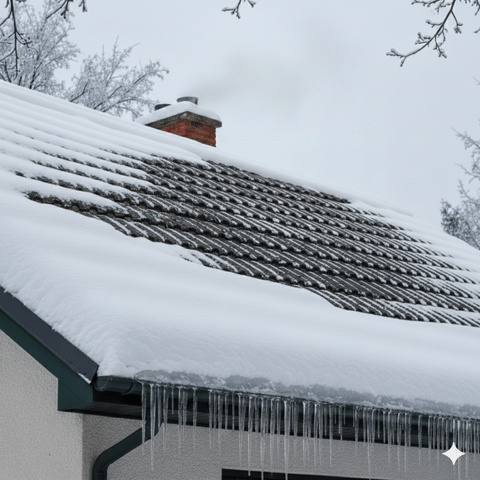
Winter has a quiet way of revealing what’s really happening above your ceiling. One morning the roof looks like a postcard covered in snow, and the next, thick ridges of ice are gripping the gutters like frozen waves. When homeowners start noticing ice dams, the first instinct is usually to melt the ice and move on. That makes sense in the moment, but the real story is usually unfolding inside the attic, not on the edge of the roof.
Calcium chloride pucks can absolutely help during an emergency. They carve small drainage paths through the ice so trapped water can escape instead of backing up under the shingles and into the house. The relief is real, especially when ceilings are at risk. Still, melting the ice doesn’t solve the reason it formed in the first place. If warm air is leaking into the attic, melting snow from underneath, and refreezing at the colder eaves, the same cycle can quietly rebuild the dam the next time temperatures swing. As Brown Roofing owner Eddie Griffin often tells homeowners, “Ice dams aren’t just a roof problem. They’re your house telling you heat is escaping where it shouldn’t.”
That’s why safety becomes part of the conversation too. Climbing onto a snow-covered roof might feel like taking control of the situation, but winter roofs are unpredictable surfaces where traction disappears and snow can shift without warning. Many injuries happen not during the work itself, but on the ladder getting there. Eddie puts it plainly: “Your roof is replaceable. You’re not. If something feels risky, it probably is.” The safer short-term move is working from the ground with a roof rake or calling trained professionals who use proper fall protection and controlled snow-removal methods designed to protect both the shingles and the homeowner.
When ice dams appear, the most important question isn’t how to melt them. It’s why they’re forming at all. In a healthy home, the attic temperature stays close to the outdoor temperature, usually within about twenty degrees. When the attic runs warmer, snow melts unevenly, water travels downward, and freezing begins again at the eaves. Poor ventilation, uneven insulation, and small air leaks around lights, hatches, or ductwork are often the hidden culprits. Ice dams don’t always mean the roof is failing, but over time they can damage shingles, decking, gutters, insulation, and even interior drywall. Left alone, a seasonal nuisance can slowly become a structural repair.
The long-term solution is less dramatic than hacking away ice and far more effective. Balanced ventilation, proper insulation depth, careful air-sealing, and safe snow management work together to keep the entire roof system at a stable temperature. When that balance is restored, the conditions that create ice dams begin to disappear. Eddie likes to frame it in simple terms: “Temporary fixes stop today’s leak. The right fix protects the house for the next twenty years.”
For homeowners across Connecticut, winter doesn’t have to be a guessing game played on a slippery roof. An honest look at the attic and roofing system can turn worry into clarity and prevent small warning signs from becoming costly damage. And in the middle of snow season, peace of mind might be the most valuable thing sitting under your roof.

.png)