What Heavy Snow Can Do to a Roof
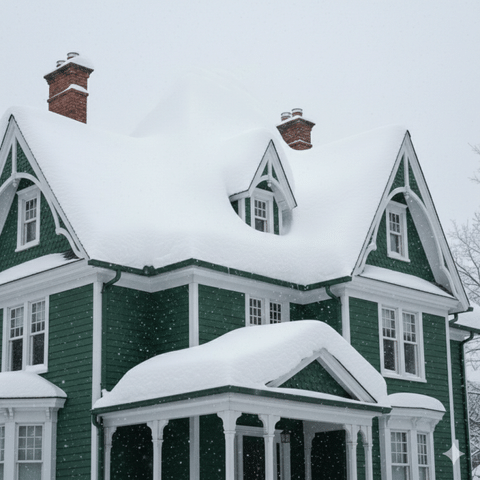
Most Connecticut roofs can handle a “normal” snowfall without breaking a sweat. The trouble starts when snow gets heavy, uneven, crusty, or repeated over back-to-back storms. At that point, your roof stops being part of the scenery and starts doing real work.
As Brown Roofing owner Eddie Griffin puts it: “Snow is temporary. The damage may not be.”
Here’s a homeowner-friendly breakdown of what heavy snow can do to your roof, what to watch for, and how Brown Roofing can help you get through winter without turning your living room into an indoor water feature.
When Snow Becomes a Problem
Snow doesn’t just sit there like powdered sugar. It drifts, packs down, melts, refreezes, slides, and sometimes gets topped with rain. Every one of those changes affects your roof differently.
1) Structural Stress
Your roof framing is designed to carry weight, but heavy snow can push it toward its limits, especially when the load is uneven.
• You may notice slight sagging along a roofline or even a ceiling plane inside.
• In more serious cases, weak spots can fail, usually where there was already an issue like older repairs, rot, prior leaks, or undersized framing.
Think of it like groceries: one bag is fine. Ten bags in one hand is… ambitious. Dennis Danley, General Manager at Brown Roofing, says: “The biggest snow problems we see aren’t always about one storm. It’s the combination of weight, uneven drifting, and repeated freeze-thaw cycles that adds up fast.”
2) Shingles and Roof Components
Snow load is not only about weight. Movement matters too.
• Sliding snow can lift, crease, or tear shingles, especially near edges, ridges, valleys, and transitions.
• Heavy snow can also beat up the critical “details” that keep water out, including:
- ridge caps
- flashing
- roof vents
- pipe boots
Those are the seams and openings of your roof system. If they take a hit, leaks tend to show up right on schedule.
3) Gutters and Fascia
Your gutters were built for water, not for being a winter anchor.
• Snow and ice hanging off the eaves can pull on gutter systems.
• Freeze-thaw adds weight and can loosen fasteners, bend metal, and stress fascia boards.
If you’ve ever heard a gutter “pop” during a warm-up, that’s your drainage system raising its hand for help.
4) Skylights, Chimneys, and Roof Penetrations
Skylights and chimneys are classic trouble spots because drifting snow loves to pile up around them.
• Drifts near skylights can increase leak risk.
• Meltwater can overwhelm flashing details when it backs up with nowhere to go.
The Sneaky Part: Why the Melt Can Be Worse Than the Storm
You’d think melting means the problem is shrinking. Sometimes it does. But the melt cycle introduces two big “gotchas.”
1) Snow often gets heavier before it disappears. As snow warms, it absorbs water and compacts. That means the roof load can increase even as the snowpack looks smaller. Translation: the warm-up plus rain can be the real heavyweight.
2) Meltwater creates ice dams and leak conditions. If your attic is warm, the roof surface above it warms too. Snow melts, runs down toward colder eaves, refreezes, and builds an ice dam. That dam traps water behind it and can push water under shingles and into the home.
What you might notice:
• water stains on ceilings or walls
• drips near exterior walls
• wet insulation, damp attic wood, musty smells
• icicles that “re-grow” quickly after you knock them down
Dennis Danley sums it up like this: “When we get thaw and refreeze, the roof can look fine from the street while water is backing up underneath the shingles. That’s why winter leaks often show up during warm-ups, not during the snowfall.”
Warning Signs Your Roof May Be Under Too Much Load
If you notice any of the following during or after a heavy snow event, take it seriously:
• Doors suddenly sticking or new drywall cracks (possible structural movement)
• Visible sagging in roof lines or ceilings
• New loud creaking or popping sounds
• Leaks appearing during warm-ups •
Heavy drifting on one section of the roof (especially lower roofs, valleys, and behind chimneys)
How Brown Roofing Can Help (Including Snow Removal)
At Brown Roofing, we treat Connecticut winters the same way we treat roofing: with systems, safety, and zero guesswork.
Professional roof snow removal (safe, controlled)
If snow loads are piling up or drifting dangerously, our team can remove snow without damaging shingles, flashing, vents, or gutters, and without you going anywhere near a ladder in freezing conditions.
Quick truth: DIY roof snow removal is risky. Homeowners can tear shingles, bend gutters, or slip trying to “save” a roof.
Ice dam prevention and solutions
Ice dams usually trace back to some combination of attic heat, ventilation, and insulation. We can evaluate what’s driving the melt-refreeze cycle and recommend improvements that reduce the problem at the source. Winter leak inspections
If you’re seeing staining, attic moisture, or active dripping, we can inspect:
• flashing (chimneys, valleys, skylights, walls)
• shingle condition and installation details
• ventilation performance
• signs of ice dam back-up
Gutters, drainage, and exterior protection
Winter is brutal on gutters and downspouts. We’ll make sure your drainage system can handle meltwater without backing up and refreezing where it shouldn’t. And as Eddie Griffin likes to say: “A roof doesn’t usually fail all at once. Winter just speeds up the consequences.”
What You Can Do Right Now (Homeowner-Safe Steps)
A few smart moves that don’t involve heroics:
• Check for uneven drifting, especially behind chimneys and on lower roofs
• Look in the attic for damp insulation or darkened roof decking
• Use a roof rake from the ground only, if you must (no ladders)
• Never chip at ice on the roof (great way to destroy shingles and flashing)
• If you’re unsure, call a pro before a minor issue becomes a ceiling repair
Need Help After a Snowstorm? If you’re in Fairfield County, New Haven County, or Litchfield County, Brown Roofing can inspect your roof, diagnose ice dam conditions, and handle safe roof snow removal when loads become a concern.
Call 1-203-723-1372 to schedule an inspection.
I
.png)