Ice Dams 101: How Poor Attic Ventilation Turns Snow Into a Roof Leak
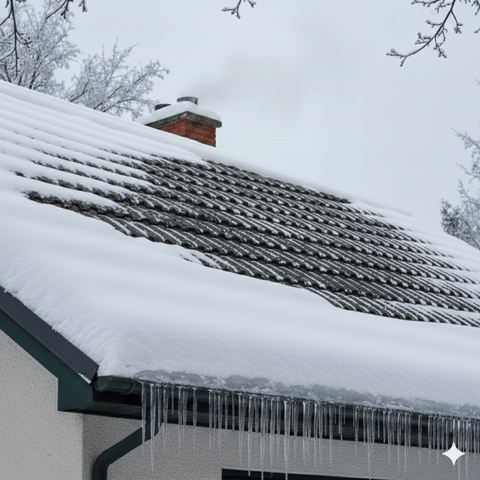
What Is an Ice Dam, Really?
An ice dam is a ridge of ice that forms along the edge of your roof, usually near the gutters. It starts innocently, then snowmelt water gets involved and things go sideways.
Here’s the key: ice dams form when your roof is warm in some places and cold in others.
• The upper roof (over your heated living space) warms up and melts snow.
• The lower roof edge (the eaves, usually over an unheated overhang) stays cold and freezes that meltwater.
• Ice builds up at the edge… and that ridge becomes a dam.
Once the “dam” exists, any new meltwater flowing down the roof can’t escape. It backs up, finds seams, nail penetrations, flashing edges, or weak spots and can slip under shingles. That’s when homeowners notice:
• water stains on ceilings
• damp insulation
• attic drips
• peeling paint near exterior walls
• leaks that seem to “come and go” with the weather
A Healthy Winter Attic Should Feel Like “Outside”
Here’s a simple rule of thumb we use all the time: In winter, your attic should typically stay within about plus or minus 20°F of the outside temperature. Why? Because the closer your attic stays to outdoor temps, the less likely your roof deck warms up enough to melt snow from below. When the attic is running much warmer than that, it’s a red flag that heat is building up, usually from a ventilation, insulation, or air-sealing issue (or a combination).
Why Poor Attic Ventilation Causes Ice Dams
Think of your attic like the buffer zone between your warm home and cold winter air. In an ideal world, your attic stays cold and dry in winter, close to the outdoor temperature.
But when attic ventilation is poor, heat gets trapped up there, and that heat warms the underside of your roof. From there, the chain reaction begins.
1) Heat builds up in the attic. Even in a well-built home, some heat sneaks upward through:
• attic hatches and pull-down stairs
• recessed lights
• wiring and plumbing penetrations
• bathroom fan ducts that leak or dump air into the attic
• gaps around chimneys and framing
With good ventilation, that heat gets carried out. With poor ventilation, it lingers, and now your attic is no longer “outside-ish.”
2) The roof deck warms up from below. That trapped heat warms the roof sheathing (the wood your shingles sit on). So even when it’s below freezing outside, the roof surface above the attic can become warm enough to melt snow.
3) Snow melts… then refreezes at the roof edge. Snowmelt runs downhill, but when it reaches the eaves, the roof is colder there because:
• the eaves often extend past the heated part of the house
• there’s usually less warmth beneath them
• they’re more exposed to the outside air So the meltwater refreezes at the edge and builds a thick ice ridge.
4) The “dam” causes water to back up under shingles. Shingles are designed to shed water down and off the roof. They’re not designed to hold standing water. But an ice dam creates exactly that: backed-up water that can work its way under shingles and into the home.
The Hidden Victim: What Ice Dams Can Do to Your Gutters
Most homeowners think of ice dams as a “roof leak problem,” but gutters often take a beating too. Here’s how:
1) Extra weight can pull gutters loose Ice is heavy.
Add thick ice ridges, frozen slush, and long icicles, and your gutter system can be forced to carry weight it was never designed for. This can lead to:
• sagging gutters
• loose fasteners
• gutters pulling away from the fascia
• sections separating at seams and corners
2) Frozen overflow can warp or crush gutter sections.
When meltwater can’t drain properly, it can freeze inside the gutter trough. As the ice expands and contracts, it can:
• bow the gutter
• distort the shape so water doesn’t flow correctly later
• stress seams and end caps, creating leaks even after the thaw
3) Fascia and soffit damage.
When gutters get yanked or overflow repeatedly, the water doesn’t just disappear. It can saturate the wood behind the gutter:
• fascia boards can rot
• soffits can stain, swell, or deteriorate
• paint can peel and trim can delaminate
This is one of the most common “spring surprises” we see: the roof stops leaking, but the exterior woodwork tells the real story.
4) Downspouts can split or pop apart.
If water freezes in downspouts, the ice can expand and:
• crack plastic components
• split metal downspouts at seams
• pop elbows apart
• block drainage, causing more overflow and more ice buildup
5) Recurring ice can shorten gutter lifespan.
Even if the gutter doesn’t fail all at once, repeated freeze-thaw cycles can fatigue the system over time. That means:
• more frequent leaks at seams
• more maintenance
• earlier replacement than expected
Why Ice Dams Get Worse After Big Snowfalls
Here’s a detail most homeowners never hear: snow is an insulator. After a storm, a thick layer of snow can trap heat against the roof surface, which makes melting from below even more likely. That’s why ice dams often appear after a heavy snow even if the temperatures stay cold.
The Most Important Thing to Know: Ventilation Alone Isn’t Always the Full Fix
Attic ventilation is a big piece of the puzzle, but ice dams usually come from a combination of:
1. Air leaks (warm air escaping into the attic)
2. Insulation gaps or low insulation levels (uneven roof temperatures)
3. Poor ventilation (heat can’t escape once it gets in)
In other words: if your attic is acting like a warm room, ventilation can’t “undo” that by itself. The best results come from air sealing + proper insulation + balanced ventilation (intake and exhaust working together).
What Good Attic Ventilation Looks Like
A healthy winter attic usually has:
• Soffit vents (intake) to bring cold air in at the lowest point
• Ridge vent or roof exhaust vents (exhaust) to let warm air out at the top
• Baffles to keep insulation from blocking airflow from soffits into the attic
This creates a steady flow of air that helps keep the roof deck cold and reduces the chance of ice dam formation.
What You Should Do If You Have Ice Dams
If you’re dealing with ice dams right now, here’s the safest, most homeowner-friendly approach:
• Don’t hack at the ice with a shovel or axe. It’s easy to damage shingles, gutters, or yourself.
• Look for interior warning signs like staining or dripping and address them quickly.
• Schedule an attic and roof evaluation to identify the real cause: air leaks, insulation, ventilation, or all three. At Brown Roofing, we don’t just treat the symptom. We look for the root cause and recommend the right correction so you’re not fighting the same winter battle every year.
If you’re seeing ice buildup, leaking, or attic moisture this winter, we can help you figure out what’s happening and what it will take to stop it. Brown Roofing proudly serves Fairfield, New Haven & Litchfield County, CT. Reach out for an inspection and we’ll give you clear answers, photos, and a plan. Because once winter shows you the weak spot… it usually doesn’t stop there.

.png)